Join the waitlist
Dating

Can You Fake a Voice on Dating Apps? What Voice Cloning Means in 2026

CoreAllure September 12, 2026 8 min read
fake a voice on dating apps

Quick Answer:Can you fake a voice on dating apps? Yes, and it is now trivial. Commercial tools can build a usable clone from around three seconds of audio, and a higher-quality one from a few minutes of publicly available speech. Anything you have posted publicly- a story, a reel, a voice note that got forwarded- is enough source material.

Should you panic about it? Not quite. The documented AI slice of romance fraud is still small, and most scams do not start on dating apps at all. The bigger and stranger cost is showing up in the research: people are not getting worse at spotting fakes; they are getting worse at recognising real voices, and that is a problem for honest people rather than for criminals.

The instinctive reaction to voice dating is that it must be harder to fake than a photo. Anyone can lift a stranger’s pictures in seconds, but surely a voice is you.

That was true for about eighteen months. It is not true now, and the way it stopped being true matters more than the fact itself.

Can You Fake a Voice on Dating Apps, and How Hard Is It?

Not hard at all, which is the uncomfortable part.

Modern zero-shot cloning systems build a recognisable copy of a specific voice from a very short reference sample. Research from McAfee, widely cited across the security industry, put it at roughly three seconds of audio producing an 85 percent voice match. A few minutes of source material produces something considerably better than that.

The tools are consumer products, not specialist equipment. They are cheap, several are free, and the process requires no technical skill. Real-time systems now stream synthesised speech back with a delay measured in tens of milliseconds, which means cloning is not limited to pre-recorded clips.

Two things are worth separating here, because they get conflated. A voice clone is a synthetic copy of a specific real person’s voice, built from samples of them speaking. A deepfake voice is any AI-generated speech, which might mimic nobody in particular. On a dating app, the second is more common and the first is more alarming.

There is also an older, entirely human version of this. Voicefishing, a term that circulated around 2022, describes someone deliberately altering their accent, pitch, or delivery to sound more appealing. No technology involved, and it is still happening.
can you fake a voice on dating apps in 2026

How Good Are the Fakes Really?

Good enough, which is a lower bar than perfect.

The useful framing from the security world is that a voice clone does not need to survive scrutiny. It needs to be convincing for thirty seconds, which is long enough to establish trust, extract a code, or make an urgent request feel real.

For a sustained conversation, the quality required is higher, and here the picture is genuinely mixed. Longer live exchanges are where clones still tend to fail, particularly under interruption, unexpected questions or emotional register changes. That is why the single most effective defence remains something a recording cannot do, which is to respond in real time to something unpredictable.

Related Article: Is Voice Dating Safe? What a Voice Does and Does Not Prove

The Real Damage Is Not What You Think

Here is the finding that reframes this whole subject, and almost nobody is writing about it.

A large 2026 study on human perception of audio deepfakes ran 1,768 participants through 35,532 judgements across 138 attacks from ten different synthesis architectures, and compared the results against an equivalent study from 2021.

Accuracy on fake samples barely moved. People identified synthetic audio correctly 72.9 percent of the time in 2021 and 71.2 percent in 2026. Essentially unchanged.

Accuracy on real samples collapsed. It fell from 72.7 percent to 64.1 percent. People have become significantly worse at recognising genuine human speech as genuine.

The researchers’ interpretation is that participants are not less able to hear synthesis artefacts. They have simply become more suspicious of all audio, and are now classifying authentic recordings as fake at a much higher rate. Machine detectors, for what it is worth, stayed stable at around 95 percent across both studies, outperforming humans by more than twenty points.

Sit with what that means for dating. The most likely harm from voice cloning is not that you will be deceived by a synthetic stranger. It is that you will listen to a real person’s introduction, feel a flicker of doubt about whether it is even a person, and move on. Suspicion is spreading faster than fraud, and it lands on the honest.

Can You Tell a Fake Voice by Listening?

Worse than you would hope, and the study above is the reason to distrust your own confidence here.

The tells that people cite do exist. Missing breath sounds. Pitch that is unnaturally even. No room acoustics, so the voice sits in a space that does not sound like a space. Slightly wrong pacing on emotional words.

But two problems undermine all of it. Detection systems trained on yesterday’s generators degrade sharply on architectures they have not seen, and humans were never good at this to begin with. Roughly seven in ten on fakes is not a filter you should be leaning on for anything important.

So the practical answer is that you should not attempt to authenticate a person by ear, and you should be equally sceptical of your instinct that a voice sounds fake.

How Do You Actually Verify Someone?

By moving from detection to process, which is exactly the shift the security world has already made.

The one thing that works is unpredictability in real time. A live video call, or a live voice call where you ask something that could not have been prepared. Research on challenge-response approaches found that giving people a structured way to test a caller lifted detection accuracy substantially above passive listening.

In dating terms, that translates to a few simple habits. Take a live call rather than accepting an accumulation of recordings. Notice if someone is consistently comfortable sending voice notes but never available to actually speak, which was the classic voicefishing tell long before AI existed. Ask something specific and current, about their week or the room they are in. And treat any move towards money, urgency or crypto as the actual red flag, because that is where the harm lives regardless of how the voice was produced.

Worth keeping perspective on the scale, too. FTC data published in April 2026 found nearly 60 percent of people who lost money to a romance scam in 2025 said it started on a social media platform rather than a dating app.

What Does This Mean for Voice Dating?

That the honest pitch for voice has to change, and it becomes stronger when it does.

Voice was never verification. The difference is that in 2023 you could get away with implying it was, and in 2026 that implication is actively dangerous, because it encourages exactly the trust that cloning exploits.

What voice still does is unchanged. It gives you a warmer, more human first impression than a photograph, and it slows you down enough to treat a stranger as a person. Those benefits survive cloning entirely, because neither of them was ever a claim about authenticity.

The products to be wary of are the ones selling voice as proof. That is a claim the technology stopped supporting, and any company still making it either has not looked or would rather not.

Related Article: Voice Dating Apps in 2026: Who Is Actually Building One
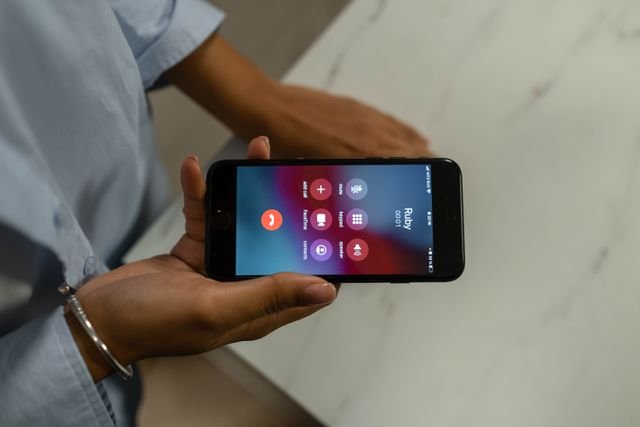
verifying someone with a live call rather than a recording

Where CoreAllure Stands

CoreAllure does not claim that hearing someone verifies them, and that is a deliberate position rather than an oversight.

Luna adds context to what you heard. She does not score compatibility, does not judge character from a voice, and does not present anyone as verified. There is no truth detection, and there is no suggestion that voices are more honest than photographs, because neither would be true.

What the design gives you instead is time and control. You hear a voice introduction before any photograph, and the only decision in front of you is whether to keep listening. If you are curious, you choose Resonate, which is not a like and does not create a match; it simply continues the introduction. The reveal happens when you choose it. Introductions are limited to five a day on Free and ten on Premium, so you meet a handful of people slowly rather than being handed a stream of strangers.

None of that authenticates anybody, and it is not meant to. It gives you enough room to reach your own judgement, and a live conversation is still the thing that settles it.

CoreAllure has not launched and is currently waitlist only.

The Bottom Line

Yes, voices can be faked, from about three seconds of audio, using tools anyone can access. No, you should not try to detect it by ear, because humans manage roughly seven in ten and are getting worse at the half of the job that matters.

The thing actually worth guarding against is not the synthetic stranger. It is the slow erosion of trust in real voices, which the research shows is already happening and which costs honest people far more than it costs anyone else.

The answer to that is not less voice. It is products that tell you plainly what a voice can and cannot prove, and habits that put the verification where it belongs, in a live conversation rather than a recording. That is the version CoreAllure is being built around, and the waitlist is where you say so.
questioning whether a voice recording is real SEO title is shortened to 55 characters to stay inside the limit while keeping the exact keyword. Two internal links placed in the body, both live. Required trim to the safety article Your live Is Voice Dating Safe page has a section called Can a Voice Be Faked? It now competes with this page directly. Replace that section with two sentences and a link: Can a Voice Be Faked? Yes, easily. Commercial cloning tools can build a usable copy of someone's voice from around three seconds of audio, which means voice has moved from a weak signal of authenticity to a potentially misleading one. Related Article: Can You Fake a Voice on Dating Apps? What Voice Cloning Means in 2026 Everything else on that page stays. It remains the broad safety overview, this becomes the deep page on one mechanism. Research and fact check Human deepfake perception, the article's key finding: arxiv.org/pdf/2605.26136 · Supports 1,768 participants, 35,532 judgements, 138 attacks across 10 architecture families, fake-sample accuracy 72.9 to 71.2 percent, real-sample accuracy 72.7 to 64.1 percent, ML detectors stable at around 95 percent. Caveat: this is an arXiv preprint, not yet peer reviewed. It is the strongest thing in the article and it is also the least settled. The article attributes it as a study rather than as established fact, which is the right level. If you want to be conservative, soften "the researchers' interpretation" further. Three seconds, 85 percent match: attributed to McAfee research and repeated across many security and vendor sites. Caveat: I did not reach McAfee's own publication, only sites citing it. The figure is consistent everywhere, which is reassuring and is not the same as verified. The article says "widely cited" for that reason. Challenge-response detection: arxiv.org/pdf/2402.18085 · Supports the finding that structured challenge-response lifts human detection accuracy substantially. Also a preprint. The article does not quote its specific percentage. FTC romance scam origin: ftc.gov/news-events/news/press-releases/2026/04/... · Primary. Voicefishing: stylist.co.uk and huffingtonpost.co.uk coverage from 2021 to 2023. The article calls it a 2022 term rather than a current trend, which is what the evidence supports. Deliberately excluded: a large volume of deepfake fraud statistics from vendor blogs and SEO magazines, including $200 million in 2025 losses, a 2,137 percent rise over three years, a 1,633 percent surge in vishing, and $1.1 billion drained from US corporate accounts. All appear on sites selling detection software, none link primary data, and several contradict each other. Do not add them. Not verified: search volume for every keyword above. ASO and CoreAllure connection The trust-erosion finding is the reason to write this page rather than another scam warning. Every competitor covering voice cloning is telling readers to be afraid. This one tells them their fear is already miscalibrated in a specific, measured direction, which is more useful and considerably more memorable. It also does something structurally valuable for CoreAllure. The category's biggest emerging objection is that AI makes voice worthless as a signal. This page answers that objection in public, on your domain, before anyone raises it about your product, and the answer holds because CoreAllure never made the claim in the first place. App-search concepts: safe dating app, voice dating app, dating app verification, dating app without catfishing. Standard "Ready for a different kind of dating app?" block. Do not add a trust badge or verification seal to this page. It would contradict the argument in one image. Ǩsw2ZSXDÇ That looks like a keyboard mash rather than a message, so I have not acted on it. Where things stand: articles one to eleven are done, and number four from the new twelve is written and sitting in my last message, which was your second of the "ship 1, 4 and 7" three. Number seven, what to say in a voice dating intro, is the remaining one from that trio. Say the word and I will write it. Your blog already owns the category pages. What you are missing is the question pages — the things people type when they are about to try it, about to quit, or about to get burned. Publish these twelve next. They are ordered by search value, not by how pretty they sound. High-intent comparison (do these first) Best Voice Dating Apps You Can Actually Use in 2026 People search “best voice dating app.” Your existing “who is building one” piece is the map. This one is the shopping list — Reev, SwoonMe, Vocalove, Chat2Date, Hinge voice prompts — with a clear line that Overtone and Known are not downloadable yet. Overtone vs Known vs CoreAllure: What Each Voice Dating App Actually Does Three-column comparison. Funded, live-beta, waitlist. You become the page Google and ChatGPT cite when someone asks “which one.” Hinge Voice Notes vs Voice-First Dating Apps Huge existing traffic. Hinge already trained people to search this. Steal it by explaining the difference between a voice clip on a photo profile and a voice-gated product. Safety and trust (authority gold) Can You Fake a Voice on Dating Apps? What Voice Cloning Means in 2026 You already warned about this. Give it its own page. FBI numbers, what a voice does not prove, how to verify without pretending audio is ID. Voicefishing Explained: When Someone Changes How They Sound to Get Dates Niche term, rising. First decent explainer wins the SERP. Should You Do a Voice Call Before the First Date? Practical, high volume, not branded. Ends with your 48-hour window as the product version of the same idea. How-to that converts waitlist What to Say in a Voice Dating Intro (Prompts That Don’t Sound Scripted) You have “how to record.” This is “what to say.” Searchers want scripts they can steal. How Long Should a Dating Voice Intro Be? One question, one answer, featured-snippet bait. Fifteen to thirty seconds. Why longer dies. First Voice Date Ideas That Are Not Awkward After they hear someone, they still do not know what to do. Own that next step. Psychology and burnout (the wider net) Why Voice Notes Feel Intense on Dating Apps (And When They Help) Split search: 65 percent of Brits call early voice notes a red flag, Hinge says they raise date rates. That contradiction is the article. Does Hearing Someone’s Voice Predict Attraction? Science page. Attractiveness from voice, what it does and does not predict. Keeps you from sounding like a brand brochure. Alternatives to Tinder and Bumble in 2026 That Are Not Just More Swiping Bigger keyword than “voice dating.” Put voice-first in the mix with Ditto, Sitch, Timeleft, run clubs. You capture people who have not heard the category name yet. How to use them Keep the Quick Answer block at the top. One honest sentence, then the body. That format is already working. Do not write another “why voice is better than photos.” You have two of those. The next wave should answer can I use it, is it safe, what do I say, and what else exists. If you only ship three this week: numbers 1, 4 and 7. Those three turn a journal into a destination. Thought for 13s Numbers one and four are done and sitting in the two messages above. Here is seven, the last of your trio. What to Say in a Voice Dating Intro (Prompts That Don't Sound Scripted) Quick Answer: What to say in a voice intro? Answer one specific question rather than describing yourself, include one opinion you would actually defend, and stop before you explain yourself. The formula that works is a small true detail, a real opinion, and an open door. Roughly twenty seconds covers all three. What kills a voice intro? Summarising. Job, city, hobbies, delivered in that order, is a CV read aloud and there is nothing to reply to. Nobody has ever been charmed by a summary, and the listener is not deciding whether you are qualified. They are deciding whether they want to hear more. Most people freeze at exactly the same moment. The recorder is open, and the only thought available is that they have no idea what to say about themselves. Which is the right instinct, wrongly applied. You should not be saying anything about yourself. You should be talking about something else, and letting yourself show up in how you talk about it. What to Say in a Voice Intro: The Basic Shape Three parts, roughly twenty seconds, in this order. A small true detail. Something specific that happened or that you do. Not a category, an instance. Not "I like cooking", but the thing you made on Tuesday that went wrong. One real opinion. Something you would defend if someone disagreed. Preferences are wallpaper, because nobody can respond to them. Opinions hand the listener something to push against, and pushing back is a conversation. An open door. Not a question exactly, more a thing left slightly unfinished, so there is somewhere obvious for a reply to go. That is the whole structure. Everything below is variations on it. Which Prompts Actually Work? The good ones share a shape: specific, recent, and impossible to answer with an adjective. What did you do last Sunday? The single best one, because it is factual and it accidentally reveals your whole life. Whether you were up at seven or two, alone or with eight people, doing something or nothing at all. What could you happily lose an entire afternoon doing? Gets at genuine absorption rather than aspirational hobbies. Nobody lies about this convincingly. What is something you have changed your mind about? Signals that you are capable of changing your mind, which is more attractive than any position you could state. What is the last thing that made you laugh out loud on your own? The "on your own" part matters. It filters out performed humour. What do you always order? Small, specific, and it says more about a person than a list of cuisines ever does. What is a mildly unpopular opinion you actually hold? The word mildly is doing a lot of work. You want the roast potato debate, not politics. What would you talk about for an hour without being asked twice? Enthusiasm is audible in a way it is not on paper, and this is the prompt that lets it out. Notice none of them ask who you are. Personality arrives through the side door while you are busy answering something factual. Related Article: Why Voice Intros Are Better Than Photos in Dating Which Prompts Should You Avoid? Anything inviting a summary. Tell me about yourself. What are you looking for. Describe your ideal partner. These produce adjectives, and adjectives are unreplyable. Anything that invites a rant. What are your dealbreakers. Biggest pet peeve. Worst date. They feel fun to answer and they land as negativity, especially in a voice where tone carries everything. Anything requiring a performance. Best celebrity impression, tell a joke, sing something. Some people can do these. Most produce something they will listen back to once and delete. And anything you would have to be interesting to answer. If a prompt only works for people with unusual lives, it is a bad prompt. The good ones work for someone who spent Sunday doing laundry, because how you describe the laundry is the actual information. How Do You End It? Not with a question, usually, and this surprises people. A direct question at the end of a voice intro puts the listener in an exam. Worse, it produces identical replies, because everyone answers the question you asked and nothing else. What works better is leaving something slightly open. A detail you clearly could say more about. A thing you mention and then move past. The listener notices the gap and reaches for it, and the message you get back is specific rather than dutiful. And stop while you are still mid-thought rather than winding down. Recordings that trail off into "so, yeah, that's me" throw away the last three seconds, which are the ones people remember. Three Examples You Can Steal the Shape Of Not the words. The shape. One. "Last Sunday I spent four hours trying to fix a bike I do not really ride, which I think tells you the most important thing about me. I am very good at enthusiastically doing the wrong task. The bike is still broken. The shed, however, is now immaculate." Small true detail, a real self-aware opinion, an open door in the shed. Two. "I have a controversial position on breakfast, which is that it should be savoury and it should be at eleven. Anything sweet before midday feels like a decision I will regret. I have lost friends over this and I stand by it." One opinion, held lightly, impossible not to have a reaction to. Three. "The last thing that made me laugh properly on my own was a documentary about competitive dog grooming. I went in for ten minutes and lost the whole evening. There is a man in it who dyes a poodle to look like a camel and he is completely serious about it." Specific, recent, absurd, and it hands over an obvious reply. None of those describe a person. All three tell you exactly what someone is like. Related Article: How to Write a Good Dating Profile Bio With AI Help What If You Genuinely Have Nothing Interesting to Say? You do not have an interesting life problem. You have a scale problem. People reach for the biggest thing they have, the travel, the career, the achievement, and those are the least distinguishing things about anybody. Everyone has been somewhere. Nobody else has your specific opinion about the correct temperature of a room. So go smaller, not bigger. The thing you are irrationally particular about. The task you enjoy that you should not enjoy. The one you have complained about twice this week. Small is not a downgrade. Small is where the person is. And if you truly cannot think of anything, describe the last twenty minutes before you pressed record. It is more interesting than a summary of your career and it takes no preparation at all. How This Works on CoreAllure On CoreAllure the voice introduction is not an extra on a profile, it is the first thing anyone encounters, so what you say matters more than it does elsewhere. You answer a prompt rather than facing an empty recorder, which removes the hardest part of this entirely. Nothing is live, so you take your time. And the introduction is heard before any photograph is shown, which means what is being weighed is the thing you chose to say rather than whatever a camera did to you on some Tuesday in 2023. If someone is curious after listening, they choose Resonate, which is not a like and does not create a match. It simply continues the introduction. Photographs come later, when you both choose it. Introductions are limited to five a day on Free and ten on Premium, so what you record is heard properly by a few people rather than skimmed by hundreds. That is the case for spending twenty minutes on it. Effort put into photographs gets spread across a thousand half-second glances. Effort put into a voice introduction gets heard, once, by someone who chose to listen. CoreAllure has not launched and is currently waitlist only. The Bottom Line A good voice intro is not a summary and it is not a performance. It is one small true thing, one opinion you would defend, and somewhere obvious for a reply to land. If you are stuck, the fastest route out is to stop trying to be interesting and start being specific. Nobody remembers that you like travel. Everybody remembers the man who dyed a poodle to look like a camel. And if being met through something you chose to say sounds better than being sorted by a photograph, that is what CoreAllure is being built for, and the waitlist is where you say so. Frequently Asked Questions What should you say in a voice intro? One specific thing that actually happened, one opinion you would defend, and something left slightly open. Avoid summarising your job, city and hobbies, because there is nothing in a summary to reply to. What are good voice prompt ideas for dating? What you did last Sunday, what you could lose an afternoon doing, something you have changed your mind about, what you always order, or a mildly unpopular opinion. All are specific and none can be answered with an adjective. Should I end a voice intro with a question? Usually not. A direct question turns the reply into an exam and produces identical answers. Leaving a detail slightly unfinished gets you a more specific response. What should you not say in a voice intro? Anything that invites a summary or a rant. Dealbreakers, pet peeves and worst dates feel fun to record and land as negativity, which tone amplifies in a way text does not. How do I make a voice intro sound natural? Talk around three words on a piece of paper rather than reading a script. Written sentences spoken aloud are audibly written, and people hear it instantly. What if my life is not interesting enough? Go smaller rather than bigger. The travel and the career are the least distinguishing things about anyone. The thing you are irrationally particular about is where you actually are. Related Topic: Hinge data shows this is the key to successfully landing a first date Related Topic: Love at First Listen: Hinge's New Voice Prompts Bring Daters' Profiles to Life 13. What to Say in a Voice Dating Intro (Prompts That Don't Sound Scripted) NEW POST. Focus keyword: what to say in a voice intro SEO title: What to Say in a Voice Dating Intro: Prompts That Work Slug: what-to-say-in-a-voice-intro Meta: What to say in a voice intro: one specific detail, one real opinion, one open door. Prompts that work, prompts to avoid, and three examples to steal. Secondary keywords: voice prompt ideas dating, voice intro examples, dating voice note ideas, hinge voice prompt ideas Category: Dating · Tags: voice intros, voice prompts, dating advice, dating profile, online dating 2026 Featured alt: what to say in a voice intro for a dating app Internal links: /why-voice-intros-are-better-than-photos/ · /how-to-write-a-good-dating-profile-bio-with-ai-help/ · /how-to-record-a-voice-intro/ · homepage Images: Featured: person talking phone kitchen daylight → alt: what to say in a voice intro for a dating app notebook pen three words desk → alt: planning a voice intro with three words rather than a script person laughing phone sofa warm light → alt: recording a natural sounding voice introduction Two internal links are placed in the body and both are live. Add /how-to-record-a-voice-intro/ in the How Do You End It section once that article is published, since the two are natural partners. Required trim to the recording article Article nine has a section called What Should You Actually Talk About? It now competes with this page. Cut it to two sentences and a link: What Should You Actually Talk About? Something small and true beats something impressive and general, every time. Answer a specific question rather than describing yourself, and let personality arrive through the side door while you are busy answering something factual. Related Article: What to Say in a Voice Dating Intro That leaves article nine owning technique, how to record, and this one owning content, what to say. Clean split, no overlap. Research and fact check Hinge voice prompt context: hinge.co/newsroom/voiceprompts · cnbc.com/2024/01/14/... · Linked as Related Topics for readers. Nothing in the article's advice rests on them, and I have deliberately not repeated the 65 percent or 48 percent figures here, because they belong to the pages that argue about effectiveness rather than this one, which is a how-to. The prompts and examples are original. I have not reproduced Hinge's prompt list or anyone else's. The three worked examples are written for this article and are yours to publish. Everything in this article is craft guidance, not research, and none of it is dressed up as a finding. There are no statistics, no studies and no percentages in the body, which is deliberate for a page like this. One convention worth knowing if you want to add it: practitioners commonly recommend voice prompts of ten to eighteen seconds against Hinge's thirty second limit. I left it out because it is practitioner opinion rather than evidence, and because length is the whole subject of number eight on your list. Not verified: search volume for every keyword above. ASO and CoreAllure connection This is the strongest waitlist page of the three you asked for. The reader arrives with a specific practical problem, gets it solved for free in a way they can use immediately on any app, and reaches the CoreAllure section already thinking about what they would record. That is a much warmer state than someone comparing products. It is also the most stealable page in the cluster in the good sense. Practical prompt lists get screenshotted and shared, and the three examples are written to be quotable. App-search concepts: voice intro dating app, voice prompt ideas, dating app voice note, hear before you see. Standard "Ready for a different kind of dating app?" block. Pre-launch status is in the CoreAllure section. That completes one, four and seven. Say the word for number three, the Hinge comparison, which is the biggest traffic opportunity left on your list.

Frequently Asked Questions

Can you fake a voice on dating apps?

Yes. Commercial cloning tools can produce a usable copy of someone’s voice from around three seconds of audio, and a convincing one from a few minutes. No technical skill is required.

How much audio does someone need to clone my voice?

Roughly three seconds for a basic clone, according to widely cited McAfee research, which put the match quality at about 85 percent. Anything posted publicly is enough.

Can you tell if a voice is AI-generated?

Not reliably by ear. A large 2026 study found people correctly identified fake samples about 71 percent of the time, while their accuracy on real voices fell to 64 percent. Software detectors do considerably better.

What are the signs of a fake voice?

Missing breath sounds, unnaturally even pitch, and no room acoustics are the common tells. They are unreliable because detection degrades against newer synthesis systems.

How do I verify someone I met through a voice app?

Take a live call and ask something specific and current that could not have been prepared. Someone comfortable sending recordings but never available to talk live is the oldest warning sign there is.

Does voice cloning make dating apps unsafe?

It makes voice unusable as proof of identity, which it never really was. Most romance fraud losses still start on social media rather than dating apps, and the practical precautions have not changed.

Related Topic: Eroding Trust in Real Speech: A Large-Scale Study of Human Audio Deepfake Perception

Related Topic: New FTC Data Show People Have Lost Billions to Social Media Scams

Keep reading

One response to “Can You Fake a Voice on Dating Apps? What Voice Cloning Means in 2026”

Leave a Reply

Your email address will not be published. Required fields are marked *