
Mixed Signals: Why They Are Usually Not Mixed at All

Quick Answer:Mixed signals are rarely two competing messages. They are one message you have not accepted yet, arriving through a medium that strips out tone. Someone who is warm in person and vague about meeting again is not confused. They are telling you something consistent, and the inconsistency is between what they say and what you hope.
So why does it feel so confusing? Two reasons. Text removes almost everything that carries intent, so you supply the missing meaning yourself, and you supply it hopefully. And uncertainty makes everything feel larger, which is why a delayed reply can occupy an entire evening.
Here is the loop.
They were lovely on Saturday. It is now Wednesday, and you have had one message, at eleven at night, which you have read eleven times. You have constructed two theories, and you believe whichever one you read last.
That is not a reading comprehension problem. It is what happens when a signal arrives without any of the things that normally carry its meaning.
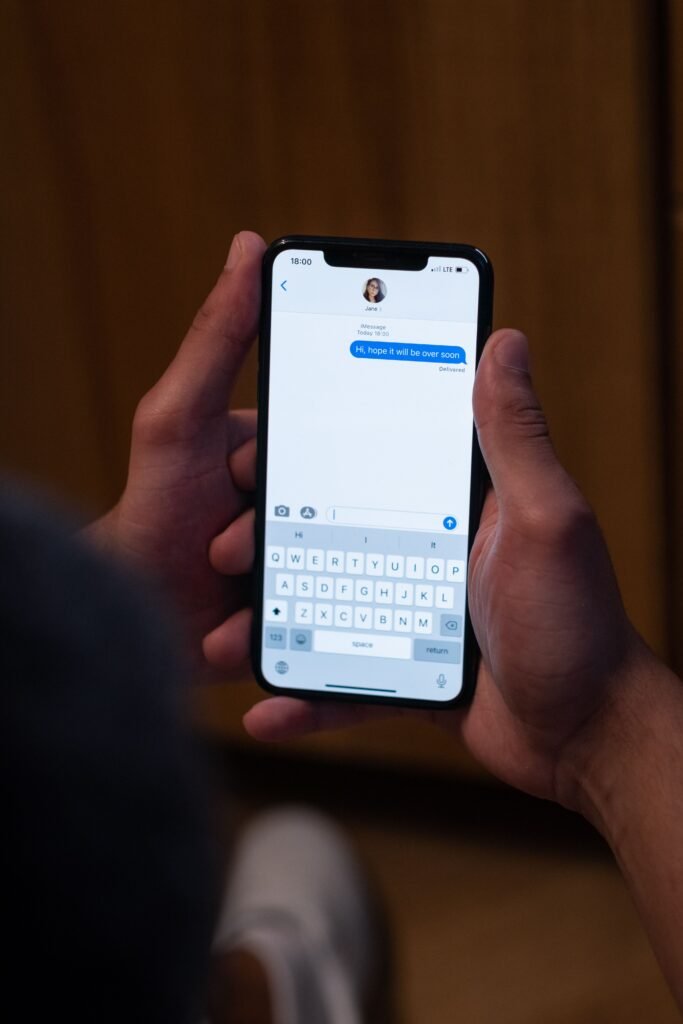
Why Text Produces So Many Mixed Signals
Because most of what tells you how something was meant is not in the words.
Research comparing the same message delivered by voice and by text has found that voice conveys substantially more about the person behind it. Tone, pace, hesitation, and warmth all carry intent, and all of them are gone the moment something becomes typed.
So you receive “sounds good” with nothing attached, and your brain does what brains do with a gap. It fills it. And it fills it according to what you want to be true, which is why the same five words can read as enthusiasm on a confident day and dismissal on an anxious one.
The signal was never mixed. It was incomplete, and you completed it twice.
The practical consequence. Any ambiguity you are agonising over in a text thread is largely your own interpretation, which means rereading it will never resolve anything. More reading produces more interpretations, not more accuracy.
Related Article: Should You Do a Voice Call Before the First Date?
The Signals That Are Not Actually Mixed
Four combinations that people routinely describe as confusing, which are not.
Warm when you are together, absent in between. They enjoy your company and are not building anything. Both parts are true and consistent.
Fast replies, no plans. They like the contact. They do not want the commitment of a date. That is one clear position, not two conflicting ones.
They reappear whenever you withdraw. The most misread of all. This is not interest returning. It is maintenance, and it is the defining shape of breadcrumbing.
They say they are not looking for anything serious, then act serious. Believe the sentence. People who tell you their limits are usually accurate, and the behaviour that contradicts it is the part that will not last.
Notice what they share. In each case, there is a consistent message and a hopeful reading, and the mixture is between those two rather than inside the other person.
Related Article: What Is Breadcrumbing? The Signs and What to Do
When They Genuinely Are Mixed
Worth saying, because the cynical version of this article is also wrong.
Sometimes a person is actually ambivalent. They like you and are not over someone else. They are interested and overwhelmed at work. They want a relationship in principle and feel panicky about this one in practice.
Real ambivalence exists and it is not manipulation. But it is also not your problem to decode, and it rarely resolves in your favour while you wait quietly. Someone genuinely torn will tell you they are torn if you ask directly. Someone who will not say anything is not torn; they are comfortable.
Why Uncertainty Makes It Feel So Much Worse
Because not knowing amplifies everything.
Relationship researchers describe this through relational turbulence theory, which predicts that uncertainty in a relationship produces heightened emotional reactivity. In plain terms, when you do not know where you stand, ordinary events become evidence. A short reply becomes a verdict. A good evening becomes proof. You are not overreacting; you are reacting normally to a situation with no stable ground in it.
There is a second mechanism underneath. Rewards that arrive unpredictably produce far more persistent behaviour than rewards that arrive reliably. Inconsistent attention is, structurally, the most compelling kind. That is why the person giving you the least clarity often occupies the most of your attention, and it is not a sign that they matter more.
What to Do Instead of Decoding

Three things, and the first one ends most of this.
Ask a question that cannot be answered vaguely. Not “what are we”, which invites a speech. Something concrete with a day in it. “Are you free Thursday?” A yes, a counter-offer, or a non-answer. All three are information, and you will have it within a day rather than a month.
Move off text if you can. Fifteen minutes on a call resolves more than a fortnight of reading messages, precisely because it restores everything text removed. If the thought of that call makes you anxious, that reluctance is also information about how safe this feels.
Then watch behaviour over two weeks and ignore the words entirely. Did they suggest anything? Did they follow through on anything? Consistency is the only reliable signal, and it is visible on a calendar rather than in a message.
And stop running the analysis with friends. Three people interpreting a screenshot will produce three confident and contradictory readings, because none of them has the missing information either. It feels like progress, and it is just more interpretation.
The Hardest Part
Mixed signals persist because the ambiguity protects you.
As long as it is unclear, it has not been refused. The moment you ask directly, you might get an answer you do not want, and some part of you knows which answer is coming. That is why people will spend six weeks analysing texts rather than six seconds asking a question.
The ambiguity is not kinder. It is just slower.
Related Article: Dead Chats: Why Your Matches Go Nowhere and How to Fix It
Why Dating Apps Manufacture This
Because almost everything about them removes signal and adds ambiguity.
The entire early stage happens in text, which strips tone. Matches never expire, so nothing forces anyone to be clear. And there is always another option waiting, which means resolving the current one is optional for both of you. Research on online dating choice has found that the more profiles people work through, the more likely they become to reject everybody, so clarity is costly, and drift is free.
That combination reliably produces exactly what people describe as mixed signals: warmth with no direction, and no moment at which anyone has to say what they mean.
How CoreAllure Removes Some of It
CoreAllure cannot make anyone honest. What it changes is how much is left to interpretation.
You hear someone’s voice introduction before any photograph, so the first thing you receive carries tone rather than stripping it. You are not reading a bio and guessing at a person. If you are curious, you choose Resonate, which is not a like and does not create a match. It simply means you would like to know more.
The decisions are explicit rather than inferred. A mutual connection happens later, after the reveal, when you both choose it. And there is no way to drift into endless messaging. After a reveal, you can show your interest, learn a little more, ask Luna to introduce you, or leave it there.
Once two people do choose to connect, there is a forty-eight-hour window to begin the conversation. If nothing meaningful begins, the connection closes gracefully. No guilt, no penalty. That ending matters here more than anywhere. Mixed signals need an indefinite space to live in, and a connection that closes cleanly does not give them one.
CoreAllure has not launched and is currently waitlist-only.
The Bottom Line
Most mixed signals are one consistent message and one hopeful interpretation, separated by a medium that removed the tone.
Rereading will not resolve it, because the missing information is not in the message. Asking something specific will, usually within a day.
And if you find yourself reluctant to ask, that reluctance is the clearest signal of all, because it means you already suspect the answer.

Frequently Asked Questions
What do mixed signals usually mean?
Usually that one person is consistent and the other is hoping. Warm in person but vague about plans, or quick to reply but never available, are single coherent positions rather than contradictions.
Why are mixed signals so confusing in texting?
Because text removes tone, pace, and hesitation, which is where most intent lives; research comparing voice and text finds voice conveys considerably more about the person. You fill the gap yourself, usually hopefully, which is why one message can read two ways.
Are mixed signals ever genuine?
Yes. People can be genuinely ambivalent, often because of timing or someone else. But a genuinely torn person will say so if asked directly. Someone who avoids the question is comfortable rather than conflicted.
Why do I obsess over mixed signals?
Uncertainty heightens emotional reactivity, so ordinary events become evidence when you do not know where you stand. Inconsistent attention is also structurally more compelling than reliable attention, which is why the least clear person often takes up the most space.
How do I get clarity without seeming needy?
Ask something concrete rather than something emotional. A specific day and plan produces an answer within a day and does not read as pressure. “What are we” invites a speech. “Are you free Thursday?” invites a decision.
Should I just ignore mixed signals?
Ignore the words and watch the behaviour for two weeks. Who suggests things, who follows through. Consistency shows up on a calendar, and it is far more reliable than anything in a message thread.
Related Topic: 5 “Mixed Signals” That Are in Fact Signals, Psychology Today
Related Topic: It’s Surprising How Much a Voice Tells Us, Kumar and Epley
Ready for a different kind of dating app?

How to Meet People Without Dating Apps in 2026
How to meet people without dating apps? Put yourself somewhere you will see the same people repeatedly, then tell your friends plainly that you are looking.…

Why Matches Never Turn Into Dates
Why do matches never turn into dates? Because the talking stage is not a bridge to meeting; it is where meeting goes to die. Research by…

Why Can’t I Connect With Anyone? The Real Reasons and What Helps
If you can't connect with anyone, it is usually not because something is wrong with you. Modern dating trains people to stay on the surface, move…
[…] Related Article: Mixed Signals: Why They Are Usually Not Mixed at All […]