
Why Voice Notes Feel Intense on Dating Apps (And When They Help)

Quick Answer:Do voice notes on dating apps actually work? Hinge’s own data says yes. It reported that sending a voice note made a conversation 48 percent more likely to lead to a date, and its 2025 survey of roughly 30,000 daters found 35 percent of Gen Z want to receive more of them.
So why do they feel like so much? Because a voice note moves the effort from sender to receiver. You can record one while walking. The person on the other end has to find headphones, be somewhere they can listen, and give it their full attention for its entire length, with no way to skim. About 30 percent of Americans report feeling annoyed or inconvenienced by receiving one. Both things are true at once, and the gap between them is the whole subject.
There is a specific small dread that comes with seeing a forty-second voice note from someone you have matched with but never met. It is not quite bad news. It is not quite good news. It is just more than you were expecting.
That reaction is common; it is not rudeness, and understanding what causes it makes voice notes considerably easier to use well.
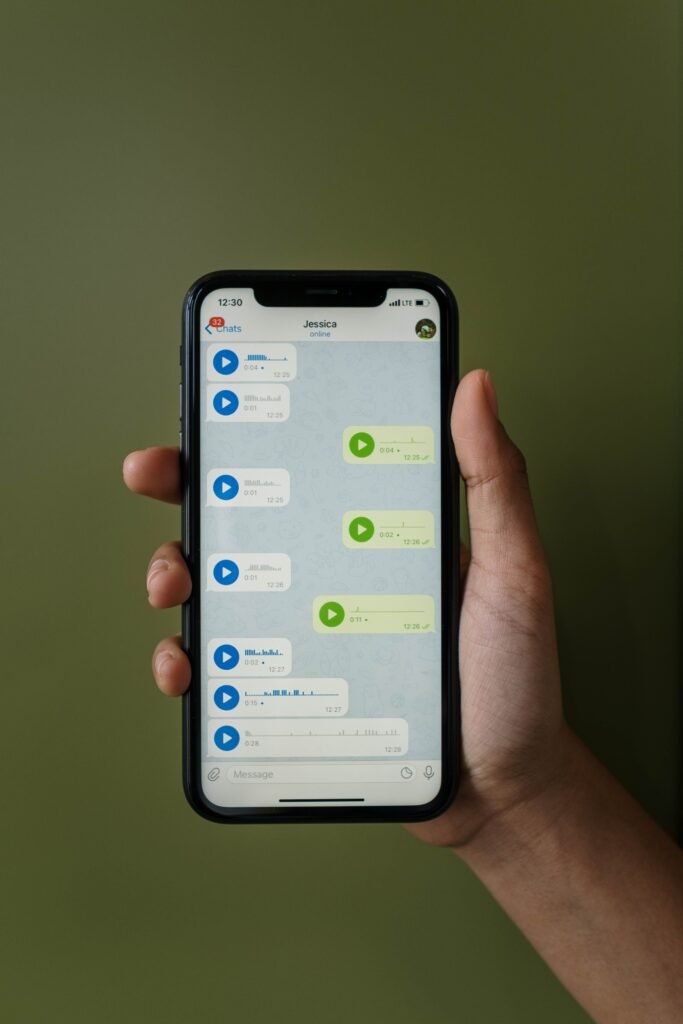
Do Voice Notes on Dating Apps Actually Help?
The data available says yes, with the caveat that almost all of it belongs to Hinge.
At the 2021 launch of its voice features, Hinge reported that 65 percent of users believed hearing someone’s voice would help them determine interest in a match, that 75 percent found it hard to feel connected when limited to text and photos, and that 52 percent felt they learned more about a match through a voice message than through text.
The more useful figure came later. Hinge data reported by CNBC found that sending a voice note in a conversation made it 48 percent more likely to lead to a date. And appetite has held up: Hinge’s 2025 report, based on a survey of around 30,000 daters, found 35 percent of Gen Z want to receive more voice notes from the people they are talking to.
Two honest caveats. This is a company’s internal data about its own feature. And there is a selection effect underneath the 48 percent, because people who send voice notes are probably more invested to begin with, so some of that lift is the person rather than the medium.
Even discounting heavily, the direction is consistent.
Related Article: Hinge Voice Notes vs Voice-First Dating Apps
So Why Do They Feel Intense?
Because of an asymmetry almost nobody names out loud.
A voice note is easy to send and hard to receive. You can record one in the street, half distracted, in the time it takes to walk to a bus stop. The person receiving it cannot skim it, cannot scan for the important line, and cannot deal with it in a meeting or on a quiet train without headphones. They have to give it real attention for its full length.
So the sender spends thirty seconds of half-attention, and the receiver spends forty seconds of full attention plus the logistics of finding a moment to listen. The effort has been transferred.
That is why a Preply survey found around 30 percent of Americans feel annoyed or inconvenienced by receiving voice notes, and why 48 percent said they believe voice notes require more effort than a typed message. It is not that people dislike hearing voices. It is that they have been handed a task.
There is a second layer on a dating app specifically. A voice note carries tone, which means it carries emotional information you cannot control. Text lets both people manage how much they are revealing. A voice does not, and being handed someone’s unfiltered warmth before you have met them can land as more closeness than you signed up for.
Who Actually Dislikes Them?
Not who you would expect, which is the genuinely surprising part.
In the Preply data, millennials were the group most likely to feel inconvenienced at 37 percent, ahead of Gen Z at 31 percent and Gen X at 20 percent. The stereotype that older people hate voice notes and young people love them does not hold.
What does hold is a preference for asynchronous voice over live voice among younger daters. A Uswitch survey found 37 percent of 18- to 34-year-olds prefer voice notes to phone calls, against 1 percent of 35- to 54-year-olds, and that nearly a quarter of 18- to 34-year-olds never answer calls at all.
Read together, those two findings say something precise. Younger daters are not avoiding voice. They are avoiding real-time obligation. A voice note sits in a middle ground, giving you the warmth of a voice without the demand of a live conversation, which is exactly why it has grown and exactly why it can still feel like an imposition when it arrives unannounced.
Why Dating Voice Notes Are Different From Voice Notes to Friends
Three things change once there is romantic context.
You cannot ask. With a friend, you would happily say you will listen later. With a match you have not met, that reply feels like rejection, so people either listen immediately under pressure or leave it and feel guilty.
Response expectation is higher. A voice note tends to invite a voice note back, which is a much larger ask than replying to a text, particularly for someone who has never recorded themselves.
And you are being assessed. Between friends, a voice note is just talking. Early in dating, it is a sample, and both people know it. That is what makes a two-minute stream of consciousness land so differently at that stage than it would with someone you have known for years.
Related Article: What to Say in a Voice Intro Without Sounding Fake
When Does a Voice Note Help?
When it is short, specific, and earns its format.
Fifteen seconds or under, early on. Long enough to carry your tone, short enough that nobody has to schedule listening to it.
When you are answering something rather than introducing yourself. A voice note replying to a specific thing they said is a conversation. One that opens with a summary of you is a broadcast.
When tone is doing work that text cannot. Something dry, something affectionate, anything where the written version might read as flat or sharp. This is the strongest case for the format, and research consistently finds that voice reduces misinterpretation for exactly this reason.
And when the conversation is already warm. A voice note three or four messages in changes the temperature. One sent as the opener asks a lot of someone who has not decided anything about you yet.
When Does It Backfire?
Length is the main killer. Anything past about ninety seconds early on reads as a monologue regardless of content, and it broadcasts that you did not consider what receiving it involves.
Sending one when they have not sent one. Matching format is a real signal. If they are writing short texts, a two-minute audio is a mismatch in more than medium.
Sending them repeatedly without a reply in kind. If someone answers your voice notes in text every time, that is an answer.
And sending one to open a conversation. It is the highest-effort thing you can ask of someone who owes you nothing yet.
Where CoreAllure Fits
CoreAllure avoids most of this by changing when the voice arrives rather than adding it to a chat.
On a normal app, a voice note is something that lands unexpectedly inside a conversation, which is the source of nearly everything above. On CoreAllure, the voice is the introduction itself, so nobody is ambushed by it. You know before you open anything that listening is what this is.
You hear someone’s voice introduction with the photograph still private, and the only decision in front of you is whether to keep listening. If you are curious, you choose Resonate, which is not a like and does not create a match; it simply continues the introduction. Introductions are limited to ten a day on Free and twenty-five on Premium, so listening stays possible rather than becoming a queue.
That removes the asymmetry, because both people are doing the same thing in the same order. Nobody has transferred effort to anybody. And because it is short by design, nobody is being handed two minutes of somebody’s morning.
CoreAllure has not launched and is currently waitlist only.
The Bottom Line
Voice notes on dating apps genuinely work and genuinely impose. Both are true, and the way to use them well is to take the imposition seriously rather than pretending it is not there.
Short, specific, in reply to something, once the conversation is already warm. That version gets the benefit Hinge’s data describes without triggering the reaction a third of people have to receiving one.
And if the appeal is hearing someone without any of the ambush, where the voice is the introduction rather than something that arrives mid-conversation, that is what CoreAllure is being built for, and the waitlist is where you say so.

Frequently Asked Questions
Do voice notes work on dating apps?
Hinge reported that sending one made a conversation 48 percent more likely to lead to a date, and that 65 percent of users believed hearing a voice helped them gauge interest. That is company data rather than independent research, and people who send voice notes are likely more engaged anyway.
Why do people find voice notes annoying?
Because they move the effort to the receiver. You cannot skim audio, and you need headphones or privacy to listen. Around 30 percent of Americans report feeling inconvenienced by receiving one, and 48 percent say they take more effort than a typed message.
How long should a dating voice note be?
Fifteen seconds or under early on, and rarely more than about a minute even later. Past roughly ninety seconds, it reads as a monologue, whatever is in it.
Is it weird to send a voice note before meeting?
Not weird, but do not lead with one. A voice note three or four messages into a warm conversation lands well. As an opener, it asks a lot of someone who has not decided anything about you yet.
Do younger people prefer voice notes?
They prefer them to phone calls. A Uswitch survey found 37 percent of 18- to 34-year-olds prefer voice notes to calls against 1 percent of 35- to 54-year-olds. But millennials were the group most likely to report finding received voice notes inconvenient.
What makes a good dating voice note?
Replying to something specific rather than introducing yourself, keeping it short, and using it when tone is doing work text cannot, like anything dry or affectionate that might read flat in writing.
Related Topic: Hinge data shows this is the key to successfully landing a first date
Related Topic: Gen Z’s ‘no calls’ trend: the shift from phone calls to texting and voice notes
Ready for a different kind of dating app?

How to Spot a Fake Dating Profile Before You Get Attached
Quick Answer: Knowing how to spot a fake dating profile in 2026 means looking beyond photographs and polished messages. AI-generated faces and convincing…

Dating as a Single Parent: How to Make Room for Someone New
Quick Answer:Dating as a single parent is mostly a time problem and an honesty problem, and almost none of the advice treats…

Dating After Divorce: Why Starting Again Feels Different
Quick Answer:Dating after divorce feels different because it genuinely is different, and not only emotionally. The mechanics changed while you were married.…