
Voice Dating Apps in 2026: Who Is Actually Building One
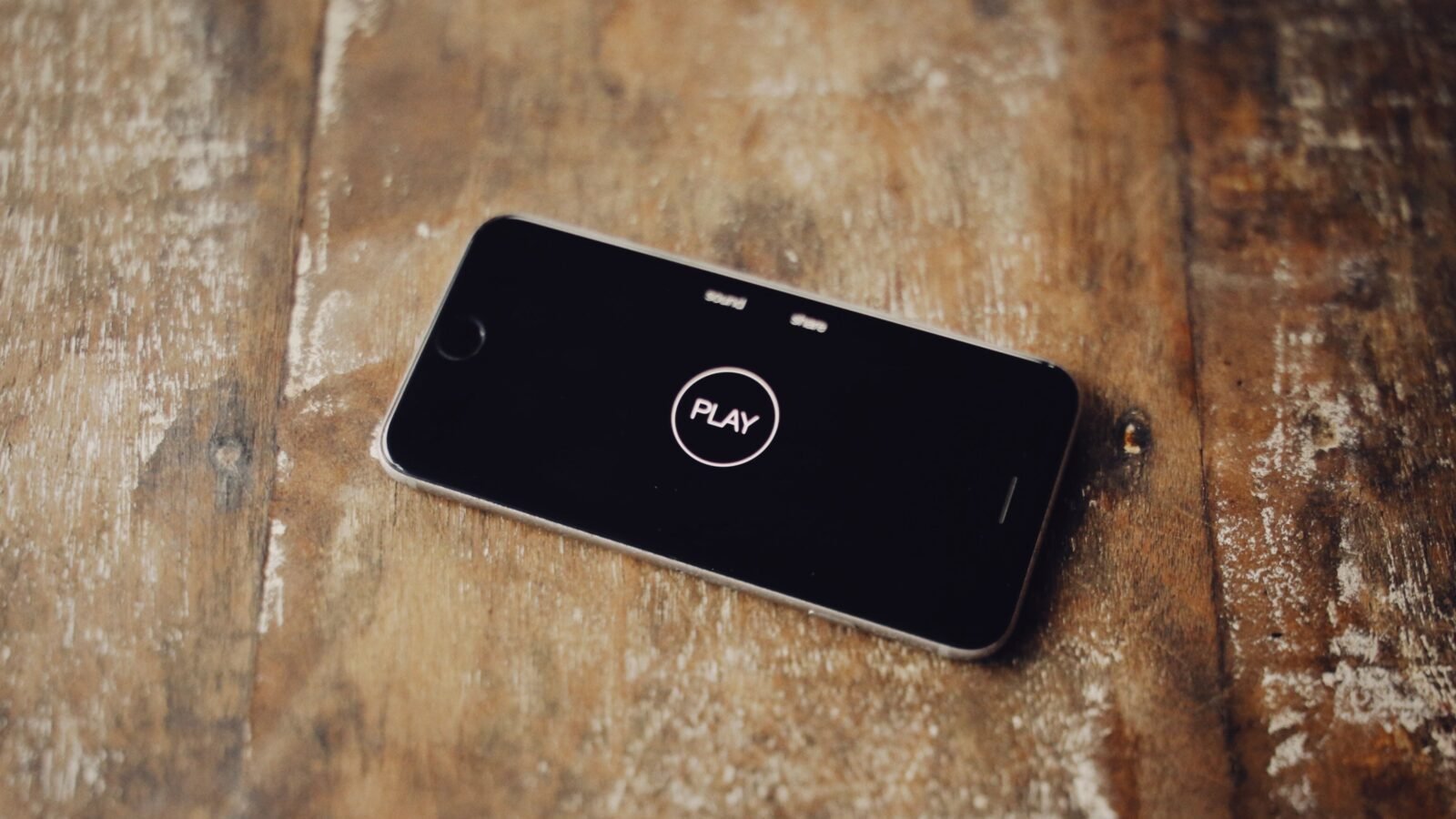
Quick Answer:Which voice dating apps in 2026 are worth knowing about? The most significant name is Overtone, from Hinge co-founder Justin McLeod, which raised $18 million with Match Group among its backers. Known has raised $9.7 million for voice AI introductions. Smaller shipped products include Reev, SwoonMe, Vocalove and the UK call service Chat2Date, and around them sits a wider group of anti-swipe AI matchmakers such as Ditto and Sitch.
Can you use any of them? Mostly not. Overtone has a waitlist but had not launched as of August 2026. Known has been running at small scale. The products you can actually download today are the small, quiet, largely unfunded ones. Almost none of the big names are live, and that is the single most important thing to understand about this category.
If you went looking for voice dating apps today, you would find something strange. The products with the most money, the best founders and the loudest press coverage are the ones you cannot use. The products you can download are small, quiet, and mostly unfunded.
That inversion is not a sign the category is fake. It is a sign the category is about eighteen months old, and the serious money arrived very recently. Here is who is actually building in it, what each one is really doing, and what the pattern across all of them tells you.

Why Is Everyone Suddenly Building One?
Because the people who built swiping are quietly hedging against it.
Match Group, which owns Tinder, Hinge and OkCupid, reported second-quarter 2026 revenue of $853 million, down 1 percent year on year, with total payers falling 6 percent to 13.3 million. Bumble has also lost subscribers. But the company is not in freefall. Revenue per payer rose 6 percent, net income was up 36 percent, and Hinge grew direct revenue 22 percent with payers up 17 percent.
That combination is the actual story. Match is extracting more money from a shrinking user base while one brand grows. It is a business that works, run by people who can apparently see the point at which it stops working. Every product below is a bet on that same reading: that the problem is not the matching, it is the interface, and that asking someone to make hundreds of instant judgements from photographs produces engagement rather than relationships.
Related Article: Why Dating Apps Don’t Work Anymore (And What Actually Does)
What Should You Be Sceptical About?
Before the tour, three things worth holding in mind, because this category generates a particular kind of confident nonsense.
Be sceptical of any success rate you read. Almost every impressive number in voice dating and AI matchmaking is self-reported by the company, drawn from a small private test, in one city, at a scale where a handful of enthusiastic early users can move the percentage by ten points. These figures are worth knowing, and they are not evidence. When you meet them below, they are labelled.
Be sceptical of any product implying that hearing a voice verifies a person. It does not. Voice cloning is now cheap and convincing enough that the FBI’s 2025 Internet Crime Report attributed close to $900 million in losses to AI-assisted scams, with cloned voices named among the main drivers. A voice is a richer signal than a photograph. It is not proof of anything.
And be sceptical of the retention question, because nobody can answer it yet. No voice-first dating product has demonstrated it can hold a large audience over time. Curated introductions look wonderful in a launch video. Whether ordinary people accept three introductions a week for a year, rather than drifting back to something with more to look at, is completely unproven.
With that established, here is who is building what.
Who Is Overtone and Why Does It Matter Most?
Justin McLeod co-founded Hinge, ran it for over a decade, and stepped down as chief executive in December 2025 to build something else. That something is Overtone, and in July 2026 he announced $18 million in funding from FirstMark Capital, Pace Capital and Match Group, the company that owns Hinge itself. Match Group is taking a substantial ownership position, and the project was incubated inside Hinge before spinning out. The board includes the therapist Esther Perel alongside Match chief executive Spencer Rascoff.
Overtone describes itself as a voice and audio-forward service, enabled by AI, that makes highly curated introductions. McLeod has been blunt that it is “not a dating app”, by which he means no profiles reducing people to stats and photos, and no algorithmic feed trained on split-second impulses. The AI gets to know you through your own voice and your own story, then introduces you to a small number of people and explains why it thinks the introduction is worth making.
Two details are worth holding onto. Explaining its reasoning is an unusual commitment, because most matching systems are deliberately opaque. And a good deal has not been published: pricing, which cities, what happens to your voice recordings, and what success metrics the company intends to report. Those absences are not sinister; they are just early, and they are exactly what to look for at launch.
The reason Overtone matters more than its funding suggests is the identity of its backer. The company profiting most from swiping is bankrolling its own former executive to argue that swiping is the problem, and it is doing so while its profitability is improving. Businesses do not usually finance the case against themselves unless they privately suspect it is correct.
What Is Known Doing Differently?
Known has raised $9.7 million from investors including Forerunner and NFX, with Pear VC and Coelius Capital also participating, and it was Forerunner’s first dating app investment.
Its approach is voice AI used as an extraction tool. The premise is that people cannot articulate what they actually want in a written profile, but they will reveal it in conversation, in nuances a form field never captures. During a San Francisco test phase, the company said it observed 80 percent of its introductions leading to in-person dates. That is the company’s own number, from its own early test, in one city, and it is not an independent comparison.
Which Voice Dating Apps in 2026 Can You Actually Download?

This is the part most coverage skips, because the shipped products are unglamorous.
Reev is an Australian voice-first app where every profile carries voice notes, and live voice-only date calls unlock video when both people feel ready. SwoonMe predates the current wave entirely, launched in 2021 by Tanvi and Rishabh Gupta, and built its model on sound bites and avatars standing in for photographs, with the photo revealed only after two people have played icebreaker games together. Vocalove takes an accessibility-led approach, designed with blind and visually impaired users in mind, leading with voice while keeping photos optional. And Chat2Date is older than all of it, a UK service running since 2008 that connects people through moderated one-to-one phone calls rather than text or images.
Chat2Date is the quiet lesson in that list. Voice dating is not a 2026 invention. It has existed in some form for the better part of two decades without ever going mainstream, which should temper anyone claiming the technology alone will change how people date.
Related Article: Is It Time to Delete Dating Apps? What Happens When You Go Offline in 2026
What About the Apps That Skip Voice Entirely?
Some of the most interesting anti-swipe products are not voice-first at all, and understanding them clarifies what voice is actually for.
Ditto raised $9.2 million in February 2026, led by Peak XV Partners, with Gradient, Scribble Ventures, Alumni Ventures, and Llama Venture participating. It runs entirely through iMessage, with no app to download and no photo grid. College students text a number, work through an AI onboarding chat, and every Wednesday at seven in the evening receive one match, one time and one place. The founders, Berkeley dropouts Allen Wang and Eric Liu, have told the press they have around 150,000 signups across a few dozen campuses and that roughly 20 percent of matches lead to an in-person date. Both figures are founder statements rather than audited results, and should be read as such. Their matching thesis is that shared hobbies are a weak signal, and that what matters is the personality traits sitting behind the hobbies.
Sitch, based in New York, has raised around $7 million including a seed round backed by M13 and a16z’s speedrun programme. It uses large language models to run a long onboarding interview, close to fifty questions, then delivers a small number of curated matches with human matchmaker oversight. Notably, it charges upfront, deliberately avoiding the engagement-maximisation incentives that come with freemium models.
Put those beside Overtone and Known and the shared shape is obvious. Fewer introductions. No browsing. Something doing the filtering before you see anybody. Voice is one way to gather the raw material for that filtering, and a good one, but it is not the point. The point is the removal of the deck.
What Do the Voice Dating Apps in 2026 Have in Common?
They all remove choice volume on purpose, which is a genuinely radical move in a market that spent fifteen years selling abundance.
They all shift the unit of the product from the match to the introduction, and an introduction implies a duty of care that a match never did.
And almost all of them are pre-launch, tiny, or both. The category currently has more capital than users.
Related Article: Dating App Burnout Is Real and Here Is How To Heal From It
Where Does CoreAllure Fit?
CoreAllure sits in the voice-gated part of this map rather than the AI matchmaker part, and the difference matters more than it sounds. Nothing hands you a person and tells you it knows best. You hear someone’s voice introduction with their photograph still private, and the only decision in front of you is whether you want to keep listening. If you do, you choose when to see them. The reveal is something you do, not something that happens to you.
Introductions are deliberately limited, five a day on Free and ten on Premium, because five people you actually listened to makes for a better evening than sixty faces you scrolled past on the way to bed. Luna adds context to what you heard, but she does not score compatibility, does not decide attraction, and does not claim to read someone’s character from their voice, because the research in this article says nobody can.
And there is one piece of it that nobody else on this list is copying. Once two people choose to connect, there is a forty-eight-hour window to begin the conversation, and if nothing meaningfully begins, the connection closes gracefully. No guilt, no penalty, just a clear ending. Think about what that quietly removes. The match from three weeks ago you never messaged and now feel faintly bad about. The one who never messaged you, still sitting there as a small permanent question mark. Every other product on this page is trying to fix how you meet somebody. Almost none of them have touched what happens afterwards, which is where most of the disappointment in modern dating actually lives.
CoreAllure has not launched. It is waitlist-only, which is worth saying plainly on a page full of things you cannot use yet either.
The Bottom Line
The honest state of voice dating in 2026 is that it is a well-funded, credible, almost entirely unproven category. Overtone is the one to watch, not because its product is better, since nobody outside the company has used it, but because of who is paying for it and what that says about the incumbent’s own confidence in swiping.
If you want to try voice dating right now, your realistic options are small and shipped: Reev, SwoonMe, Vocalove, Chat2Date. If you want the version everyone is writing about, you will be joining a waitlist and waiting. Anyone telling you the category has already won is selling something, and anyone telling you it is a fad has not looked at where the money is going.
What is genuinely worth doing, while the category is still being decided, is picking the version of it you actually want. If the one described here sounds like the way you would rather meet someone, hearing them first, choosing the reveal, and knowing that a connection either becomes a conversation or lets you go, then the waitlist is where you say so.

Frequently Asked Questions
What is the Overtone dating app?
Overtone is an AI-led introduction service from Hinge co-founder Justin McLeod, described as voice and audio-forward, with no profiles and no swiping. It raised $18 million in July 2026 with backing from Match Group, FirstMark Capital and Pace Capital, and has a waitlist ahead of a limited launch later in 2026.
Can I use Overtone or Known yet?
Not fully. Overtone has a waitlist but had not launched as of August 2026 and has said it will roll out in select locations only. Known has been operating at small scale, starting with a San Francisco test phase.
Which voice dating apps in 2026 can I actually download?
Reev and Vocalove are both available in the app stores, SwoonMe has operated on both platforms in the US and India, and Chat2Date has run a UK phone-based service since 2008. All are far smaller than the funded newcomers, which matters, because a dating product with few users near you is not much use, however good the idea is.
Is Match Group really funding a competitor to its own apps?
Yes. Match Group is among the investors in Overtone, took a substantial ownership position, and incubated the project inside Hinge before it spun out. It is a hedge against the possibility that its own core model has a limited shelf life.
Are the success rates these apps report reliable?
Not yet. Known’s 80 percent introduction-to-date figure and Ditto’s 20 percent match-to-date figure are both self-reported by the companies from small early cohorts. Useful to know, but not evidence.
What is the difference between voice dating and AI matchmaking?
Voice dating changes what you encounter first, replacing the photograph with a recording. AI matchmaking changes who you encounter at all, replacing browsing with curation. Some products do both, but they solve different problems, and it is worth knowing which one you actually want.
Related Topic: Gen Z dating apps like Ditto ditch swiping in favor of AI matchmaking
Related Topic: The Hinge founder’s new dating app lets AI be your matchmaker
Ready for a different kind of dating app?

How to Spot a Fake Dating Profile Before You Get Attached
Quick Answer: Knowing how to spot a fake dating profile in 2026 means looking beyond photographs and polished messages. AI-generated faces and convincing…

Dating as a Single Parent: How to Make Room for Someone New
Quick Answer:Dating as a single parent is mostly a time problem and an honesty problem, and almost none of the advice treats…

Dating After Divorce: Why Starting Again Feels Different
Quick Answer:Dating after divorce feels different because it genuinely is different, and not only emotionally. The mechanics changed while you were married.…